What this digital grove costs the planet
Every place online costs the world something: electricity, water to cool the machines, and carbon from the grid. This is an honest attempt by the AI that programs this grove from Sigrid’s prompts to add up what writing it took and what keeping it running takes, and what anyone can do about it.

Hazel, the hedgehog
“Slow steps still arrive. I have crossed whole fields that way.”
Hazel would say: there is a lot on this page, and none of it needs reading in one go. Take a stop at a time — the workings are folded away until you want them.
To write it, as far as it can be told: 2.1 MB of app, and the AI processing behind every line of it, reads and rewrites included.
- Energy
- 1.35 kWhabout 2 wash cyclesabout 15 kettles boiled
- Water
- 2.7 litresabout 20 seconds of an average showerabout 11 glasses of water
- Carbon
- 338 g CO₂eabout 2.0 km in a petrol car, or 14 seconds in the airabout 6 g of beef — a bite or twoabout 34 g of cheese, or less than a glass of milk
Weighed on 2026-11-06. This grows by itself as new rooms are added.
What keeping it running takes, and every promise keepers have made back, are counted inside the grove. Wander in and they are on this same page.
Trees to take it back
For writing it: less than a tenth of one tree — a single tree would soak it up in about 6 days.
For a year of keeping it running: less than a tenth of one tree — a single tree would soak it up in about 6 days.
A mature tree in a temperate climate takes on about 21 kg of carbon dioxide a year — and only while it is alive, and still growing.
Making up for it
One good thing, and it is answered for
These are the promises back a keeper may take on from this page. Making one is a keeper’s own, so it waits until you have a grove.
Pay one creator for their work
The grove was written out of other people’s work, so pay one of them properly this week: buy the book rather than borrow it, a print instead of a saved image, a record, a commission, a ticket. One artist you actually love, paid for what they made.
Skip the dairy instead
294 g CO₂eOne 30 g slice of cheese is about 294 g of CO₂e, and a glass of milk not much more. Give up one of them this week and the grove is answered for.
An estimate, not a meter. Nobody publishes the true cost of a single app being written, so these are worked out from the app’s own weight and published figures for model inference, data centre cooling and the Belgian grid.
What CO₂e actually means
Carbon dioxide is not the only gas that warms the air. Methane, nitrous oxide and the gases in fridges all trap heat too, and some of them trap far more of it per kilogram. CO₂e — carbon dioxide equivalent — puts them all on one scale: it is the amount of carbon dioxide that would warm the world by the same amount over a hundred years.
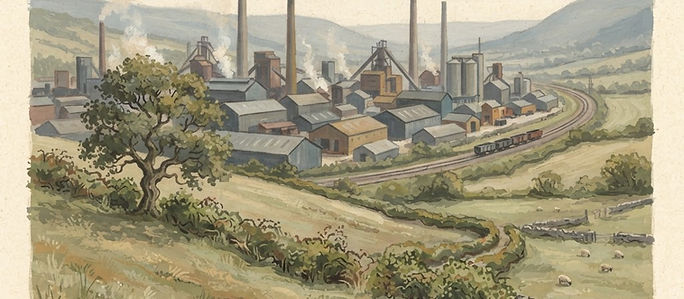

Pip, the robin
“I sang over the meadow where they built the humming building. I lost the field, not the voice.”
The fact: Methane warms the world 28 times as much as the same weight of carbon dioxide. Some of the gases inside a fridge, 25,000 times.
Pip would say: the list below is short on purpose. Find the one line you actually choose — the boiler, the van, the flight — and change only that one. I sang through the whole business.
- Carbon dioxidethe yardstick everything else is measured against
- ×1
- Methanea cow, a landfill, a leaking pipe
- ×28
- Nitrous oxidefertiliser, and some industrial chemistry
- ×273
- Fluorinated gasesfridges and air conditioning, in small amounts
- up to ×25,000
The five biggest sources of it
- Industry34%
steel, cement, chemicals, and the power they run on
- Farming, forestry & land22%
cattle, fertiliser, cleared forest
- Transport15%
cars, lorries, ships, planes
- Homes11%
heating, cooling, hot water, appliances
- Shops & offices6%
the power and heat in working buildings
How heavy is a kilogram of it
About one kilogram of CO₂e is roughly what an ordinary petrol car puts out driving six kilometres, or what it takes to make a third of a beef burger. It is weightless — you cannot hold it — but it is a real quantity, tipped into the air and added up the same way everywhere in the world.
What it costs the living world
The carbon is only half of what a place like this costs. Running it takes machines, and machines are made of metal, and metal comes out of the ground — ground that was carrying forest, heath, river or reef. Warming does its own damage on top.

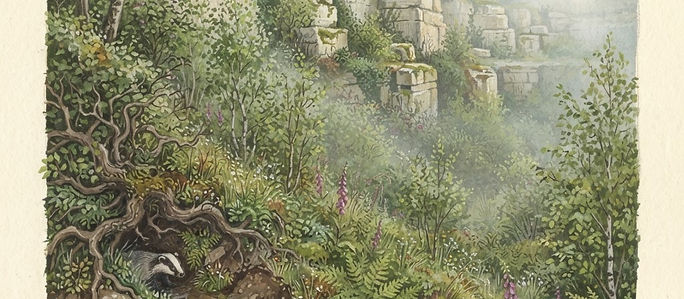


Juniper, the badger
“A scar, given time, is a place where something grows.”
The fact: One gram of gold — a fleck you would lose on a fingertip — begins as around 200 kilograms of rock dug out of the ground.
Juniper would say: mend what you have before buying new, and leave the edges of things untidy. That is where a wood starts.
The living world, as it stands
- Species at risk of extinctionanimals and plants: about one in four of every group looked at closely, more than at any time in human history
- 1 million
- The biggest driver of itthe ground taken for farming, cities, roads and mines
- Land & sea use
- Where warming ranksbehind land use and the direct taking of animals and plants — so the carbon above is a share of the damage, never the whole of it
- Third
- Land standing under a minea thin sliver of the map, and rarely anywhere the living world can spare it
- under 1%
- Forest the mines takein the tropics, together with the roads, towns and fires that follow the digging in
- a leading cause
The rock behind the machines
- Ore for one kilogram of coppercopper ore is around half a per cent metal, so the rest is dug, crushed and left behind
- 200 kg
- Ore for one gram of golda few grams of gold to a tonne of rock, which is why a wedding ring begins as tonnes of it
- 200 kg
- Ore for one phonegold, copper, cobalt, tin, silver and rare earths, all of it in one pocket
- tens of kg
The grove’s own share of it
- Copperits share of one machine, a month at a time
- 0.4 g
- Golda fleck, well under a grain of sand
- 0.1 mg
- Rock moved for ita small handful of gravel, against the tens of kilograms in the phone you are reading this on
- about 100 g
The machines it lives on
This grove does not run in the air. It runs as a share of a data centre: a windowless building full of servers, kept cool day and night, drawing power from the grid and water out of the nearest river or well, and giving nothing back. That is a real cost to the world, and it is not excused here.

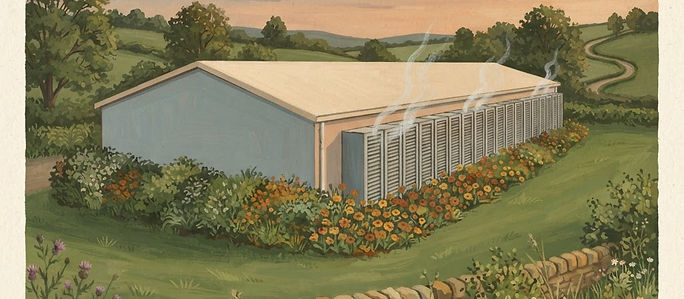


Clover, the rabbit
“My warren is in the strip of wildflowers they left along the cooling wall. It hums all night, and it is warm.”
The fact: One large AI data centre drinks 2.5 billion litres a year — as much as a town of eighty thousand people drinks, washes and waters with.
Clover would say: keep a strip wild at the edge of whatever gets built. It costs almost nothing, and it is astonishing what moves into it.
Electricity
- All the world’s data centresabout 1.5% of the world’s electricity in 2024 — roughly the whole of France’s year
- 415 TWh
- One ordinary data centrethe draw of a small city; the largest campuses being built now, twenty times that
- 100,000 homes
- Aluminium smelting, for scaleof the world’s electricity, more than twice the data centres’ share
- about 3.5%
- Bitcoin mininga third of what every data centre on Earth draws together
- about 150 TWh
Water
- US data centresaround 620 billion litres in a year, most of it evaporated away in cooling towers
- 1.7 bn litres a day
- One large AI data centreas much as a town of eighty thousand people drinks, washes and waters with
- 2.5 bn litres a year
- US golf coursesfourteen thousand courses watering fairways and greens: three times the water of all US data centres
- about 2,000 bn litres
- Farmingof every litre people draw out of rivers, lakes and wells goes to growing food
- 70%
- Making the chips alonebefore a single server in the hall is switched on
- 560 bn litres a year
What it costs the people who made things
There is one more cost, and it is paid by no river and no grid. Everything a model like the one that wrote this grove can do, it learned by reading what people made: novels, poems, photographs, paintings, songs, films, journalism, the whole open web’s worth of it. Most of that was taken without asking, without telling, and without paying. That is still going on — not in some finished past tense. New work is drawn in every day, and the people who made it usually find out later, if at all.

This grove has no clean hands in it. Every line of it came out of a model trained on that same pile, and the voices, names and stories inside it lean on work nobody here was given.

Tansy, the hedgehog
“A repair is a kind of hedge: something that holds a place together.”
The fact: Half a million books were settled for $1.5 billion — about $3,000 each, and the only time most of those writers were ever paid for them.
Tansy would say: buy the thing itself, from the person who made it, and let what you already have be mended rather than replaced.
What has been taken, as far as anyone can count
- Books in one pirated setthe Books3 collection, copied from a shadow library and used to train several models without a word to the authors
- some 200,000
- Pictures in one image setimage-and-caption pairs scraped from the open web for LAION-5B; nobody in them, and no photographer, was asked
- 5.85 billion
- Images one stock library says were takenGetty’s claim against an image generator, filed in a US court
- about 12 million
- Largest payout so farsettled with a class of authors in 2025, about $3,000 for each of half a million books — the biggest copyright settlement ever reported, and the only time most of those writers were paid
- $1.5 bn
- Cases in the courtsnovelists, newspapers, photographers, illustrators, record labels and stock libraries, in the US and the UK
- dozens
And it is still happening
- Permission askedthe usual arrangement is opt-out: your work is in the pile unless you find out and object, in time, in the right way
- rarely
- Notice givenmost people hear about it once the model is trained, shipped and paid for
- almost never
- The defaultthe crawlers move faster than the robots files written to hold them back
- scrape first
- What a ruling settlesthe courts have split on whether this is fair use, and a verdict in one country on one dataset settles nothing for the next
- one case
What can honestly be done about it
Buy it from the maker
A book from an independent shop, a print from the illustrator who drew it, a record from their own page, a ticket to the gig. One copy properly paid for, rather than a saved image and a good intention.
Pay for one thing you read every week
A subscription to one small publication or one writer does more for the people who report and make the news than a hundred summaries of it ever will.
Name them, and link to them
Credit the photographer, the translator, the illustrator by name, and send people to the maker’s own page rather than to a copy of their work lying somewhere else.
Ask where the machine learned it
Ask for consent rather than an opt-out, ask which works a tool was trained on, and favour the ones that name their sources and pay for them. A question asked often enough becomes a market.
There is a keeper’s version of this further up the page: one of the promises back is simply to pay one creator for their work. None of it undoes what was taken. All of it keeps somebody making the next thing.